MOT – Mission Oxygen Team Copy
The Challenge
During the peak of the COVID-19 crisis, hundreds of people in Nepal were dying daily due to the lack of ICU beds and access to oxygen. Hospitals were overwhelmed, and many patients were left untreated in corridors. While oxygen plants, concentrators, and ventilators were being donated, the country faced a critical shortage of skilled personnel to install, operate, and maintain this essential equipment.
Without adequate technical support, much of the donated respiratory equipment risked remaining unused or falling into disrepair—leaving communities without the oxygen they urgently needed.
The Solution
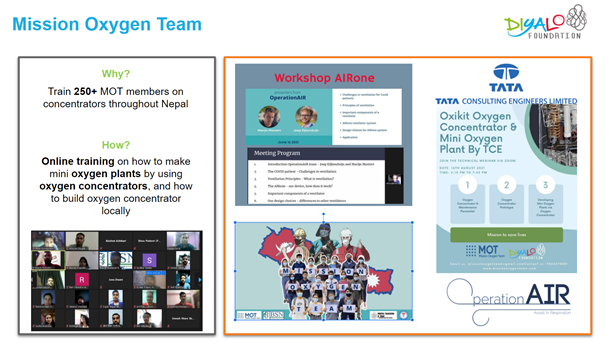
The Diyalo Foundation, in collaboration with a consortium of over a dozen Nepalese organizations, launched the Mission Oxygen Team initiative. The project focused on three core actions:
- Training and mobilizing over 100 engineers across Nepal to install, maintain, and operate oxygen plants, concentrators, and ventilators.
- Developing a centralized monitoring platform to track what respiratory equipment is available and operational, organized by region.
- Engaging companies and organizations capable of producing oxygen-related equipment to ensure local availability and rapid deployment.
This initiative provided vital technical support during one of Nepal’s most critical public health emergencies.
How it Works
- Technical training was provided to a volunteer team of engineers already active in Nepal.
- A monitoring system was designed to give real-time visibility into the distribution and status of respiratory equipment nationwide.
- National and international stakeholders were coordinated to ensure production and delivery of equipment within Nepal.
- The project operated through strong partnerships with hospitals, academic institutions, and relief organizations.
Our Partners
The Outcome
The Mission Oxygen Team addressed an urgent and life-threatening gap in Nepal’s COVID-19 response by strengthening the country’s technical capacity to manage and maintain respiratory equipment. By equipping engineers with the necessary knowledge and tools, and by improving visibility of available equipment, the project directly contributed to life-saving interventions during the pandemic.
Supporting Documents