

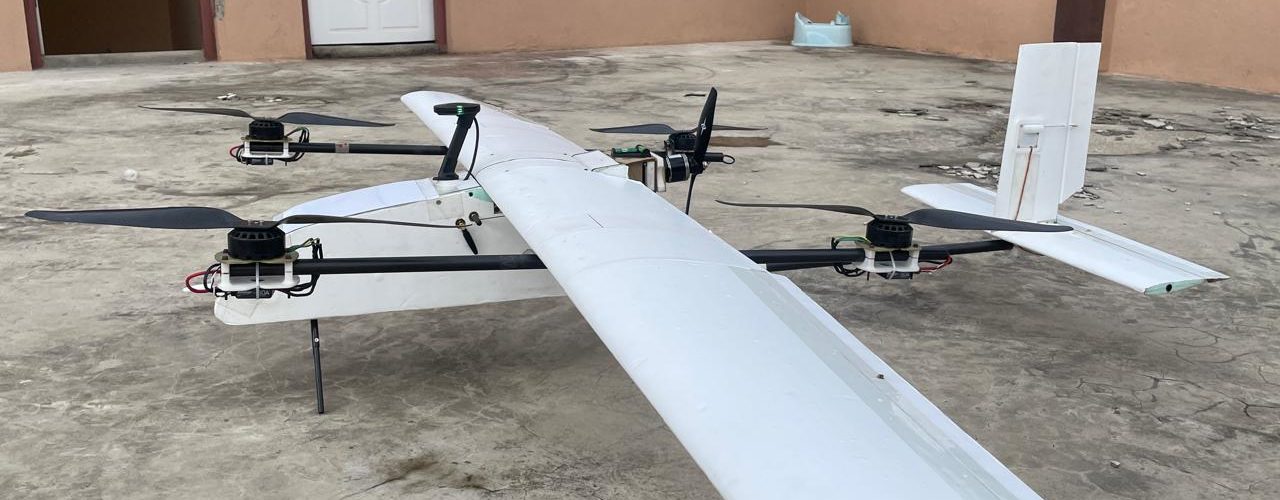
Carbon Fiber Drone Fuselage (2024 Fall)
The Challenge
Nepal’s steep terrain severely limits the range of medical delivery drones, leaving 33% of villages isolated. The original drones used heavy plywood and foam fuselages, which lacked the structural durability and weight efficiency needed for consistent long-range missions.
Our Solution
Students redesigned the drone with a monocoque carbon fiber fuselage, which reduced the total airframe weight by 17%. To further extend the range, the team adopted a 2-stroke combustion engine, providing much longer flight times than electric motors.
How It Works
The team used Finite Element Method (FEM) simulations to prove the carbon fiber shell could withstand flight forces and engine vibrations. The manufacturing process was tailored for local resources, using 3D-printed molds and a dry layup technique.


The Outcome
This lighter, stronger aircraft can fly for 32 minutes and cover over 25 kilometers per mission. This increased range makes medical supply delivery to remote mountain clinics more reliable and efficient.