

Lock-in Amplifier for Water Quality (2022 Spring)
The Challenge
Bacterial contamination of drinking water is a major health crisis in Nepal, but current testing tools are either unavailable or far too expensive for local use. Existing sensors were not sensitive enough to detect the very low levels of pathogens required for an accurate safety assessment.
Our Solution
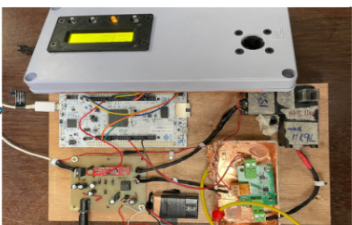
Students collaborated with PRI to develop a Lock-in Amplifier (LIA) signal processing unit. This technology improves the accuracy of sensors by extracting precise diagnostic signals from high levels of electronic background noise, allowing for the detection of E. coli at the required level of 1 part per billion.
How It Works
The device uses fluorescence spectroscopy to measure the light emitted by harmful bacteria. By using an LIA to multiply the input signal with a reference, the team could replace expensive laboratory tubes with low-cost photodiodes, making the final device affordable for rural municipalities.


The Outcome
With 140,000 deaths annually in Nepal caused by waterborne illnesses, this high-precision sensor is a vital public health tool. It provides a cost-effective alternative that allows rural communities to monitor their water safety accurately.